
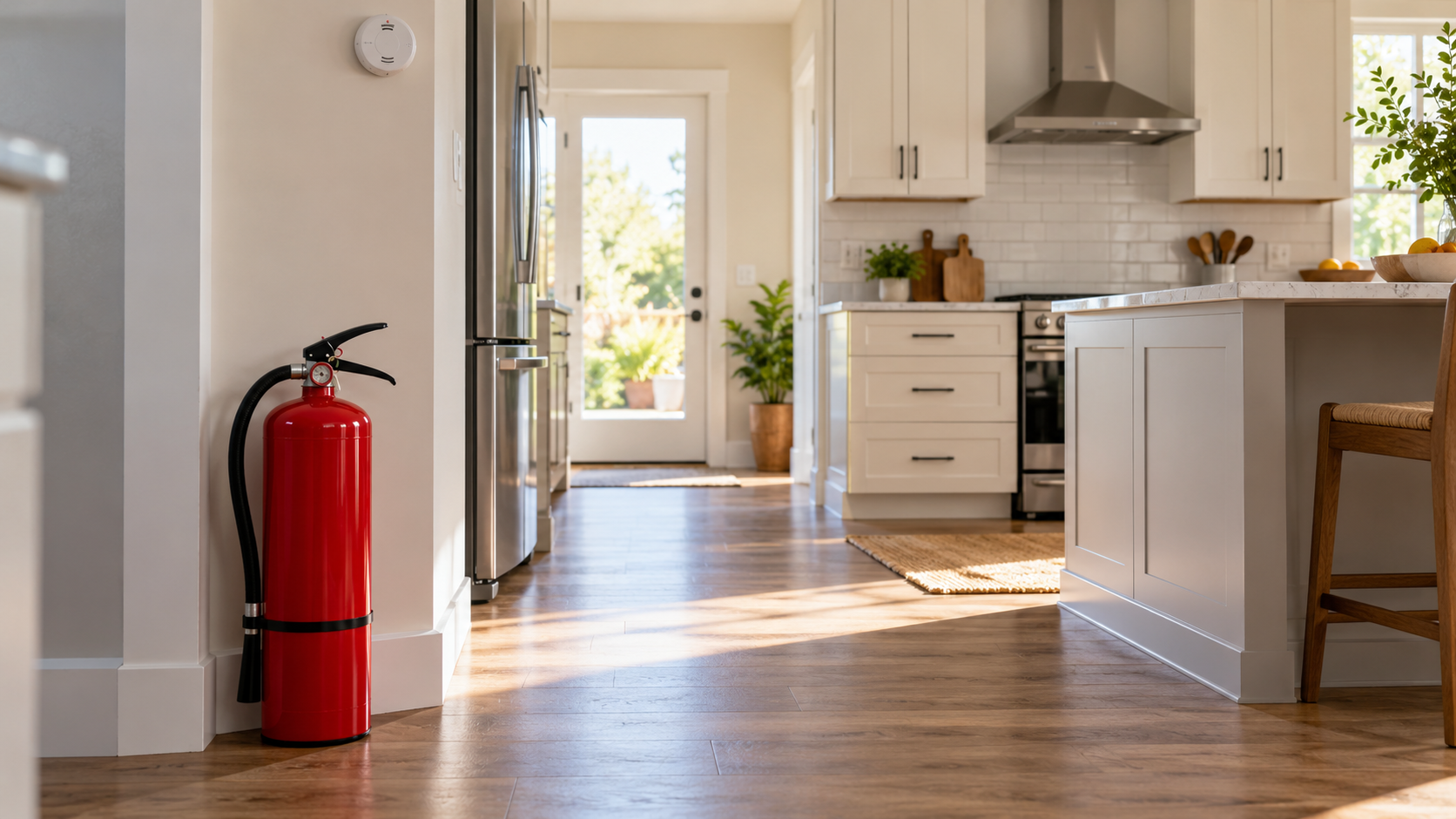
A fire extinguisher is one of those household items that feels reassuring until the moment you realize you have never decided where it belongs, what it is for, or when not to use it. A simple plan makes it more useful: place the right type where an adult can reach it on the way out, understand its limits, and keep escape as the first priority.
The U.S. Fire Administration emphasizes that a home fire escape plan needs two ways out of every room and a meeting place outside. That context matters. The extinguisher is a backup, not a reason to delay getting out.
Start with the kinds of fires a home may face
Extinguishers carry letter ratings for the type of fuel they can handle. Class A is for ordinary combustibles such as paper, wood, and cloth. Class B is for flammable liquids. Class C indicates equipment that can be used around energized electrical equipment. A multipurpose ABC extinguisher is commonly practical for a general household location because it is designed for more than one of those ordinary situations.
That does not make every extinguisher interchangeable. Read the manufacturer label before buying or using one, and keep it in its original condition. For a kitchen, think through the likely risks and location rather than assuming an extinguisher replaces careful cooking. A pan fire may call for turning off the heat and covering the pan only if it is safe to do so; moving a burning pan can spread the fire.
Choose locations that support a fast exit
Place an extinguisher where it can be reached without moving toward a growing fire. A kitchen location near an exit is usually more useful than one hidden under a sink. Consider another near a garage, workshop, or other area with tools or fuel, following the manufacturer’s placement instructions. Keep it visible, accessible, and out of the reach of very young children.
Do a quick walk-through at least once a year. Can you see the extinguisher? Is the route to the door clear? Does everyone who may need to use it know where it is? The U.S. Fire Administration’s escape-planning guidance is a useful prompt to practice routes and choose an outdoor meeting place.
Know the decision that comes before PASS
You may have heard the PASS sequence: pull the pin, aim at the base of the fire, squeeze the handle, and sweep from side to side. It is useful only after you have made a safety decision. Use an extinguisher only for a small, contained fire when you have a clear way out behind you, the fire department has been called or someone is calling, and smoke or heat is not making the space unsafe.
Leave immediately if the fire is spreading, you are unsure what is burning, the room is filling with smoke, or the extinguisher does not put the fire out quickly. Close doors behind you if you can do so safely, go to the meeting place, and do not re-enter. USFA’s fire-extinguisher overview likewise treats an extinguisher as an option for small fires, not a substitute for evacuation and emergency response.
Keep the extinguisher ready
- Check it periodically for visible damage, corrosion, leakage, or a damaged hose or nozzle.
- For a model with a pressure gauge, check that the indicator is in the operating range described on its label.
- Keep the operating instructions facing outward and readable.
- Follow the manufacturer’s maintenance, inspection, and replacement instructions; do not assume an old extinguisher is ready because it has never been used.
- Include its location in your household fire-escape practice.
Make practice calm and specific
You do not need to stage an emergency to prepare. Show responsible adults where the extinguisher is, read its label together, and talk through the threshold for leaving. Children should learn to get out, stay out, and meet outside rather than being expected to operate firefighting equipment. A short conversation now can reduce hesitation later.
Frequently asked questions
What type of extinguisher is sensible for a typical home?
A multipurpose ABC model is often suitable for general household use because its rating covers common combustible materials, flammable liquids, and fires involving energized electrical equipment. Confirm the ratings and instructions on the specific label before purchase.
Where should I keep a kitchen fire extinguisher?
Keep it visible and reachable near an exit, not where you would need to reach across a stove or through a fire to get it. Follow the manufacturer’s mounting and temperature instructions.
Should I use an extinguisher on every small fire?
No. Evacuate if you are uncertain, smoke or heat is increasing, the fire is spreading, or you lack a safe exit. Calling emergency services and getting out are more important than attempting to suppress a fire.
What does PASS stand for?
PASS means pull the pin, aim at the base of the fire, squeeze the handle, and sweep side to side. It is a technique for a small, contained fire when you already have a clear escape route.
Can children use a fire extinguisher?
Your household plan should teach children to leave the building, stay out, and meet at the agreed place outside. Adults can decide how to handle extinguisher familiarization based on the device instructions and the child’s maturity, but children should not be expected to fight a fire.
How often should I check my extinguisher?
Look at it periodically and before fire-escape practice: check for obvious damage and, if present, the pressure gauge. Follow the manufacturer’s inspection and replacement instructions for that exact model.
Leave a Reply
You must be logged in to post a comment.