
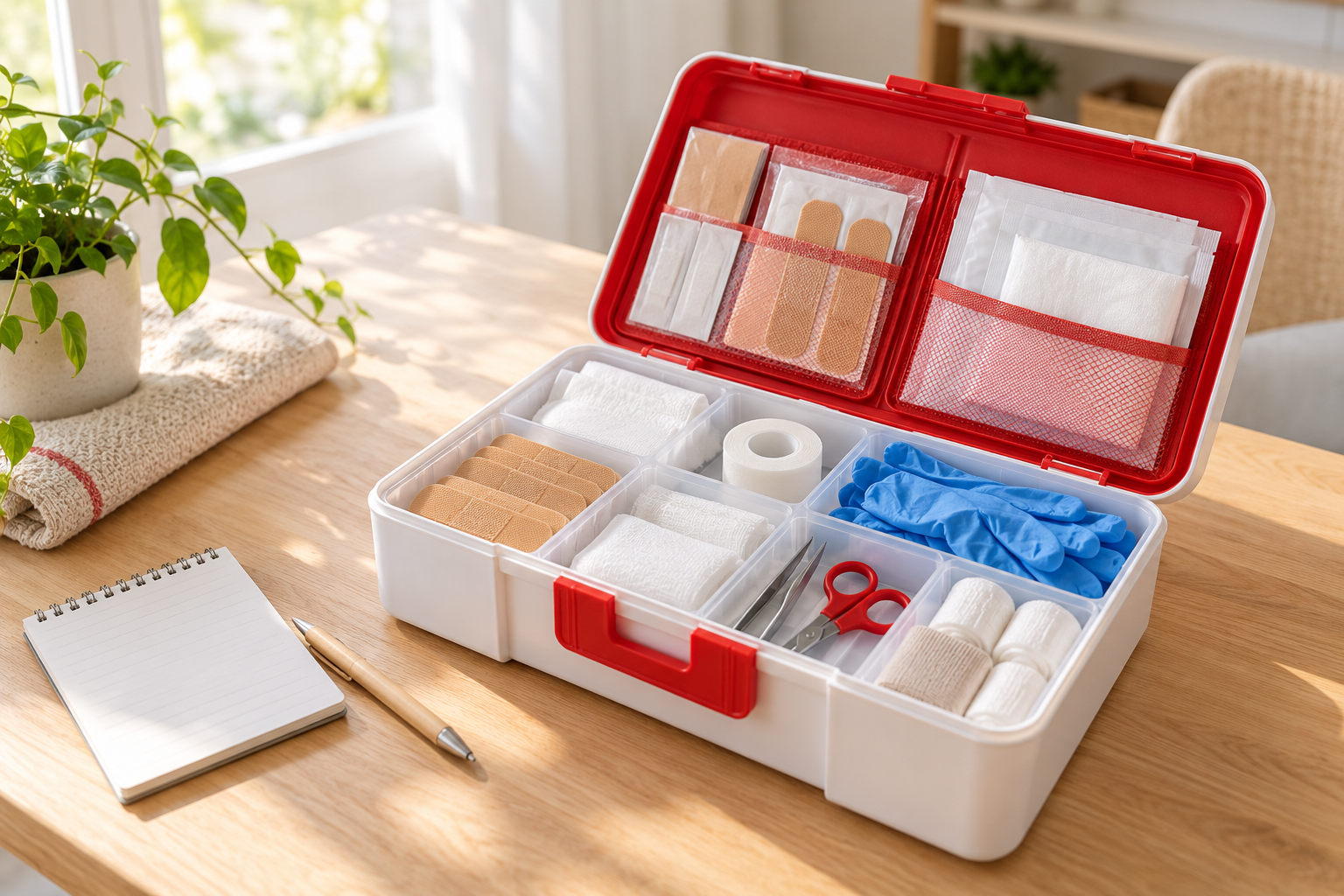
A home first-aid kit is not impressive because it is large. It is useful because it is easy to find, easy to understand, and checked before a small problem turns into a frantic search. A kit cannot replace professional care, but a few well-chosen supplies can help you respond calmly while you decide what help is needed.
A practical starting point is the American Red Cross first-aid-kit guidance. It includes everyday basics such as assorted adhesive bandages, sterile gauze, tape, non-latex gloves, a cold compress, tweezers, and a first-aid instruction guide. Treat any checklist as a starting point: the right kit depends on the people in your home, their needs, and the activities you do.
Start with a place, not a shopping list
Choose a dry, accessible location that responsible adults and older children can reach. A kitchen drawer may be convenient for small households; a high shelf or hall cupboard may make more sense where young children are present. Avoid a location that is so hidden you will forget it, or so exposed that supplies are likely to be scattered. If you keep a separate emergency supply kit, keep the first-aid kit nearby but distinct so the everyday items remain easy to reach.
Use a sturdy box, zip case, or clear container with a simple label. A kit is most useful when the person opening it can find the basics without a search. Group supplies by purpose rather than by the packaging they arrived in: wound coverings together, cleaning supplies together, tools together, and reference information in one visible pocket.
Build around core supplies
Begin with items that support common, minor situations: assorted adhesive bandages, sterile gauze pads, a roller bandage, adhesive tape, non-latex gloves, scissors, tweezers, and cleansing supplies in sealed packaging. A cold compress and an emergency blanket can also be useful additions. Leave instructions in the kit rather than assuming everyone will remember the details under pressure.
Keep medicines and personal items as a separate, clearly identified section. Follow the label directions and store them out of reach of children. If someone in the household has an allergy, a chronic condition, or another individual need, ask their clinician or pharmacist what should be kept and how it should be stored. Do not treat a generic online list as individual medical advice.
Make the kit easy to use
Add a small card with your address, local emergency number, and the contact details your household relies on. Include a pen and notepad so someone can record the time an incident happened or the care already given. These modest additions can prevent avoidable confusion when more than one person is helping.
Place a reputable first-aid guide in the container or save its location in a clearly marked note. Better still, take a recognised first-aid course if one is available to you. Supplies are more helpful when they are paired with the confidence to use them appropriately and the judgment to call for urgent care when needed.
Create a simple maintenance habit
Put a recurring reminder on the calendar every six months and after any time the kit is used. Check sealed items for damage, replace used supplies, and read the dates on products that carry expiry dates. The Red Cross advises checking kits regularly and replacing used or out-of-date contents. A quick review also lets you notice whether the kit has migrated to an inconvenient place.
Keep the review short: open the case, compare it with your basic list, replace what is missing, and close it again. If a household member’s needs or routines have changed, update the kit then. The goal is a maintained tool, not a perfectly stocked cupboard.
Know the limits
Call your local emergency number for serious or life-threatening symptoms, severe bleeding, trouble breathing, loss of consciousness, or when you are unsure how urgent a situation is. For non-emergency concerns, use an appropriate local health service. A first-aid kit helps with preparation; it does not diagnose injuries or substitute for medical advice.
Sources
Frequently asked questions
Where should a home first-aid kit be kept?
Choose a dry, known, accessible place. It should be easy for responsible household members to reach without searching, while medicines and other items needing child-safe storage should be handled accordingly.
What are the most useful basic supplies?
Adhesive bandages, sterile gauze, tape, non-latex gloves, scissors, tweezers, cleansing supplies, and a first-aid guide are sensible starting points. The Red Cross provides a fuller family-kit checklist.
How often should I check the kit?
Review it about every six months and after use. Replace used supplies, damaged packaging, and items past their labelled expiry dates.
Should I keep prescription medicines in the kit?
Individual medicines need individual storage and replacement plans. Follow the prescriber’s and pharmacist’s guidance, and keep them secure from children and moisture.
Is a pre-made kit enough?
It can be a useful start, but open it and compare the contents with your household’s needs. Add a reference guide and any clinician-recommended personal items rather than assuming one package suits everyone.
When should I seek professional help?
Seek urgent help for serious or life-threatening symptoms, severe bleeding, breathing problems, loss of consciousness, or any situation where you are uncertain. A kit supports first aid; it does not replace professional assessment.
Leave a Reply
You must be logged in to post a comment.