
Leaks rarely arrive at a convenient time. A water shutoff plan turns a confusing household detail into a short, calm response. You do not need to become a plumber to make one: the useful work is finding the main valve, checking what it controls, and making the information easy for everyone in the household to use.
Start with the main shutoff, not every fixture
The main water shutoff normally stops water entering the home. Its location varies: near the water meter, in a utility room, basement, garage, exterior wall, or where the service pipe enters the building. If you rent or live in a multi-unit building, ask the landlord, property manager, or building manager which valve serves your home and what you are permitted to operate.
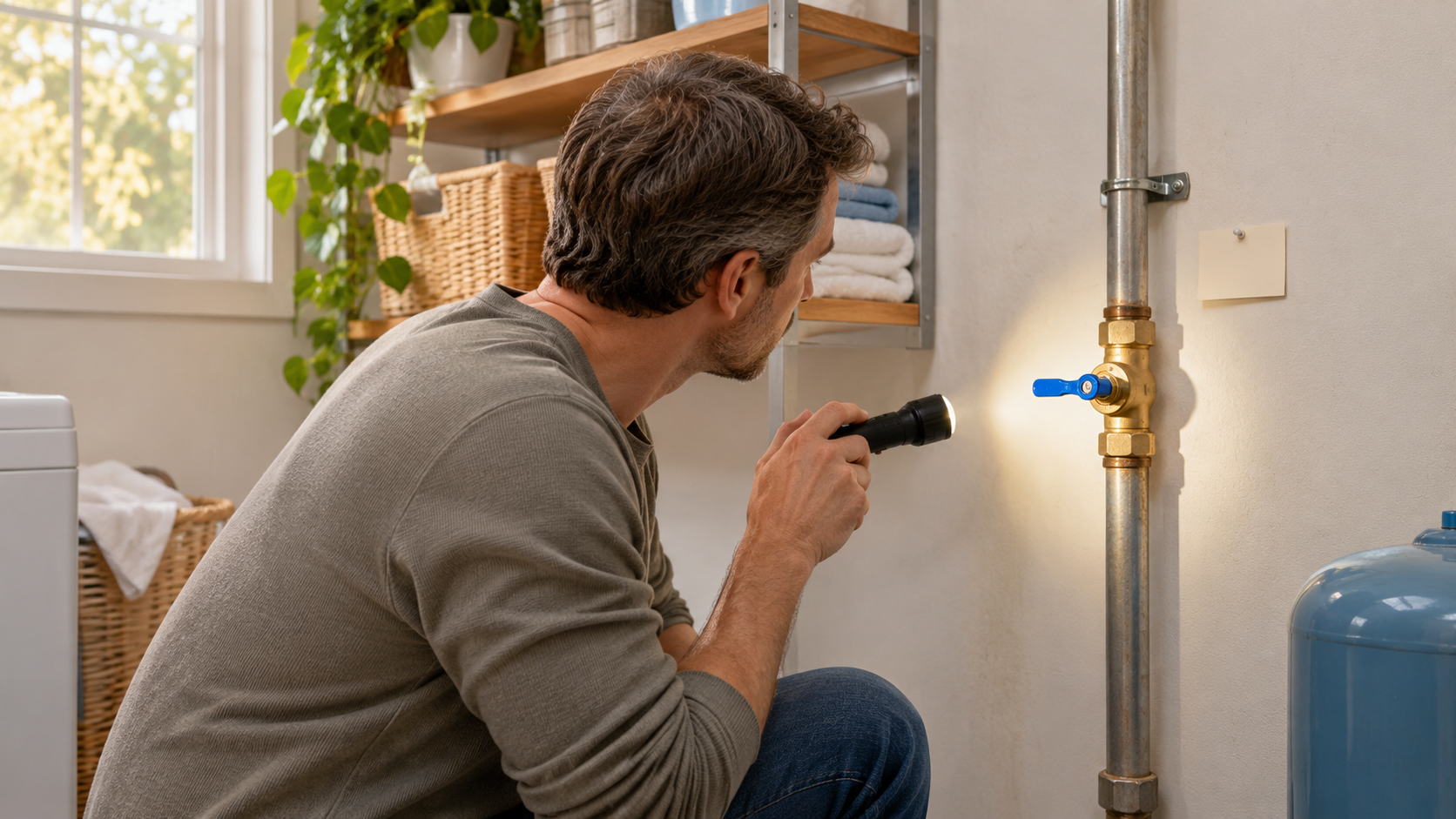
Look for the valve when there is no emergency. Bring a flashlight, clear a small path to the area, and take a clear photo showing the valve in context. Avoid forcing a corroded or stiff valve. If it will not move easily, make a note for a qualified plumber instead of turning a small problem into a bigger one.
Make the plan specific
- Record the location. Write a plain-language direction such as “garage, left wall beside the hot-water cylinder.”
- Label the route. A small household note can say which door, cupboard, or panel leads to it. Do not attach a label that obstructs the valve.
- Include the right contacts. Add the building manager, landlord, insurer’s claims line, and a local licensed plumber if you already use one.
- Keep a basic response list. For an active leak, move people away from electrical hazards, protect yourself from slipping, and follow local emergency guidance if water is near electrical equipment.
- Store it where it is usable. Keep a paper copy with other home records and a digital copy household members can find.
Do one careful practice check
Tell everyone in the home before you test anything. If you know the valve is sound and are allowed to operate it, turn it off briefly, open a cold tap to confirm water flow has stopped, then turn the valve back on slowly and check that normal flow returns. This is not a repair test; stop if you see dripping, hear unusual noises, or encounter resistance. A licensed plumber can inspect, repair, or replace a problematic shutoff.
Water utilities and emergency-preparedness guidance consistently emphasize knowing how to turn off household utilities before an emergency. The American Red Cross includes utility shutoffs in household emergency planning, while the U.S. Environmental Protection Agency’s WaterSense program recommends prompt attention to leaks because small leaks can waste water over time. Use guidance from your local water supplier as the final authority for meter-area access and local procedures.
Review after anything changes
Update the plan after moving, renovating, replacing plumbing, changing a tenancy, or adding a household member. A five-minute review once or twice a year is enough. The goal is not a perfect binder; it is a reliable answer to a simple question: if water is running where it should not, who knows what to do next?
Sources
Frequently Asked Questions
Where is a home’s main water shutoff valve usually located?
It is often near the water meter or where the water service enters the home, but the exact place varies. A landlord, building manager, local water supplier, or licensed plumber can help confirm it.
Should I test the shutoff valve myself?
Only if you are allowed to operate it and it appears sound. Tell household members first, test briefly, and stop if the valve is stiff, corroded, or leaking.
What should I do if water is near electrical equipment?
Do not step into water where electricity may be present. Keep clear and follow local emergency guidance or contact emergency services when there is an immediate electrical danger.
Can a tenant turn off the building’s water?
That depends on the lease and building layout. Ask the landlord or property manager which valve serves the unit and what action residents should take during a leak.
Why keep the plan on paper as well as digitally?
A paper copy can still be useful during a power, phone, or internet interruption, while a digital copy is easy to share with other household members.
When should I call a plumber?
Call a qualified plumber when a valve leaks, will not move normally, plumbing has been damaged, or you are unsure which shutoff controls the affected water supply.
Leave a Reply
You must be logged in to post a comment.