
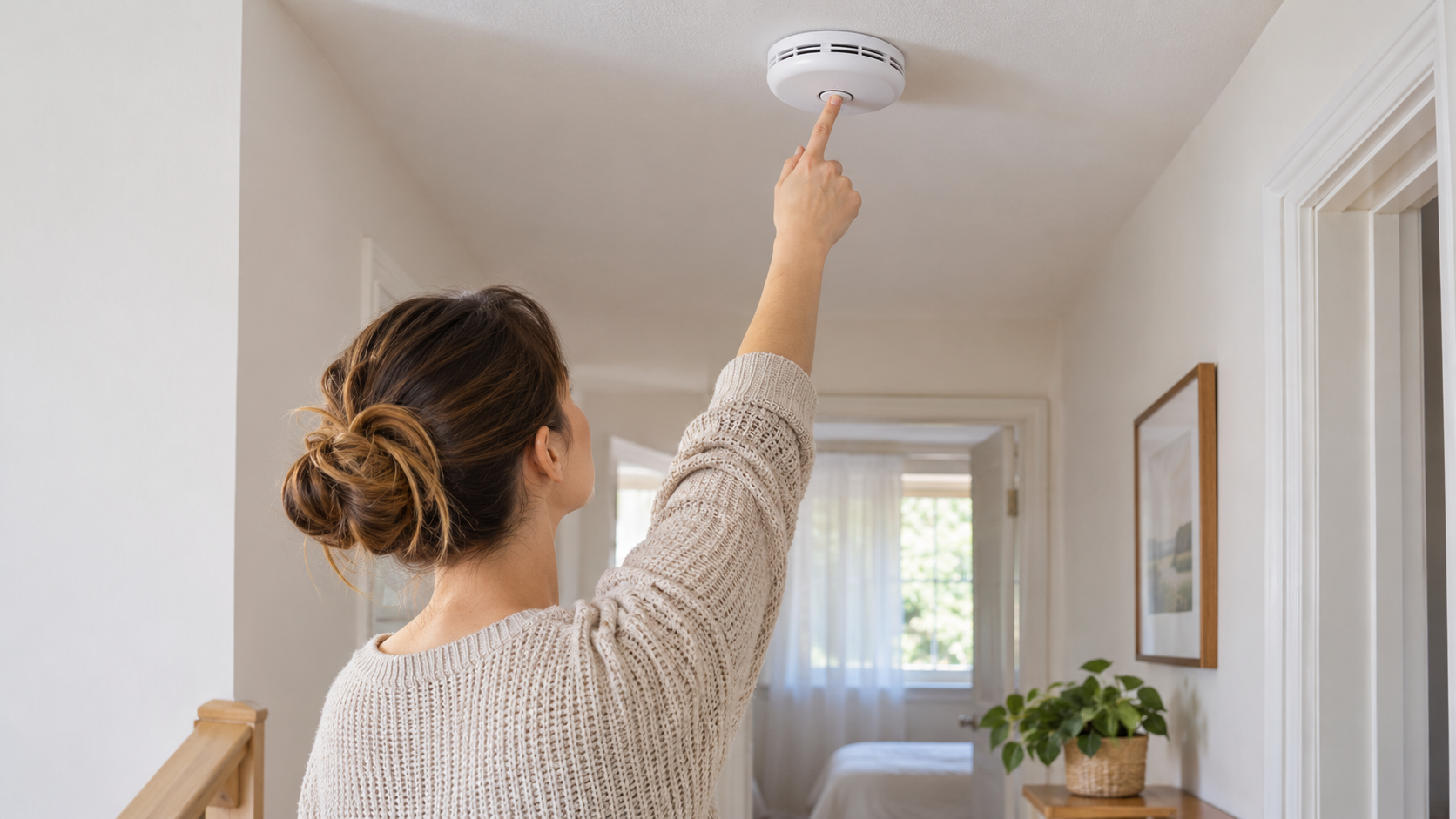
Smoke alarms are easy to forget because the best outcome is silence. A five-minute monthly check is a modest routine with a clear purpose: confirm that every alarm can still warn the people who sleep in the home. A working alarm gives people an early warning to leave safely; it is not a substitute for an escape plan, but it is an important part of one.
This guide is deliberately simple. It does not tell you which model to buy or replace local building rules. Use the manufacturer instructions and your local fire authority for those details. The aim is to make a reliable check feel ordinary enough to repeat.
Start with a quick map
Walk through the home and note each alarm. The U.S. Fire Administration recommends alarms inside every bedroom, outside each separate sleeping area, and on every level, including the basement. If you rent, make a list of missing or non-working units and notify the landlord or property manager in writing rather than attempting electrical work yourself.
Look for alarms that have been painted over, covered, visibly damaged, or placed where a closed door could keep someone from hearing them. If someone in the household is deaf or hard of hearing, ask a local fire authority or qualified supplier about compatible alerting options; needs differ, so a generic answer is not enough.
Make the monthly check repeatable
- Choose a reminder. Put one recurring event in a calendar or tie the task to another monthly routine.
- Tell others first. Let anyone at home know that a loud test is about to happen. Keep young children and pets comfortable.
- Press the test button. Follow the manufacturer directions for each unit. The U.S. Fire Administration advises monthly testing.
- Record the result. A note such as “hallway—tested” makes it easier to spot an alarm that was missed.
- Act on a failure immediately. If an alarm does not sound, consult its instructions for the correct battery, cleaning, troubleshooting, or replacement step. Do not leave a disabled alarm in place as a temporary solution.
Check the date, not just the sound
An alarm can sound during a button test and still be past the useful life stated by its maker. Find the manufacture date on the unit and add replacement timing to your home record. The U.S. Fire Administration says smoke alarms should be replaced after 10 years; follow manufacturer instructions if they require earlier replacement. For battery-powered or hardwired alarms with a backup battery, use the battery type and schedule specified by the manufacturer.
Do not remove a battery to deal with cooking fumes. The U.S. Fire Administration recommends opening a window or door, using the hush button where available, and clearing the air instead. If nuisance alarms are frequent, review placement and seek advice rather than disabling protection.
Include the escape-plan conversation
Once the alarms have been tested, take two minutes to revisit the response: everyone should leave when the alarm sounds, use the planned way out, and meet at a designated place outside. Practice makes the instruction less abstract, especially for children, guests, or people who need extra time or assistance.
Smoke alarms and carbon-monoxide alarms are different devices. CDC guidance notes that most smoke detectors do not detect carbon monoxide. If your home needs carbon-monoxide protection, select and maintain it according to local requirements and the manufacturer instructions; never assume a smoke alarm covers both hazards.
Keep a tiny home-safety record
A paper checklist on the fridge or a shared note can hold the date, alarm locations, result, and any follow-up. It is useful when household responsibilities change and prevents the “I thought someone else did it” gap. The record does not need to be elaborate—it only needs to make the next check easy.
Sources
Frequently asked questions
How often should I test smoke alarms?
The U.S. Fire Administration recommends testing smoke alarms every month. Use the test button and follow the unit’s instructions, since procedures can vary by model.
Where should smoke alarms be located?
USFA guidance calls for alarms inside every bedroom, outside each separate sleeping area, and on every level of the home, including the basement. Local rules may add requirements.
Should I replace a smoke alarm if it still beeps during the test?
Check its manufacture date and instructions. USFA says smoke alarms should be replaced after 10 years, even if a button test still produces a sound.
What should I do when cooking sets off an alarm?
Do not remove the battery. Open a window or door, use the hush feature if the model has one, and clear the air; persistent nuisance alarms are a reason to review placement.
Do smoke alarms detect carbon monoxide?
Usually, no. CDC states that most smoke detectors do not detect carbon monoxide. A combination unit may provide both functions, but check the product information and local requirements.
What if a smoke alarm fails its test?
Follow the manufacturer’s directions right away for the correct battery, cleaning, troubleshooting, or replacement. Until the problem is resolved, treat the missing protection as urgent and keep other household safety measures in mind.
Leave a Reply
You must be logged in to post a comment.