
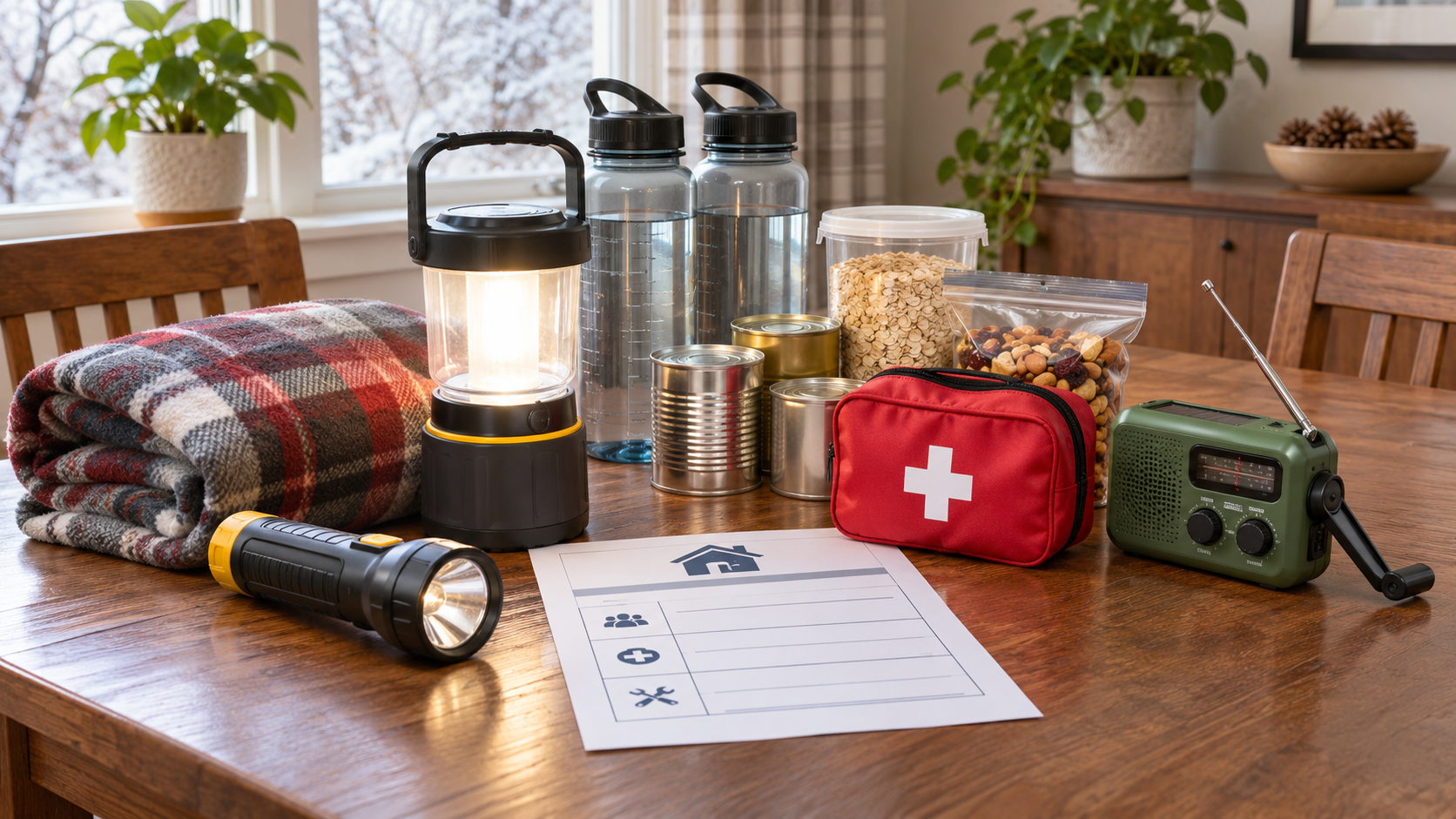
A power-outage kit turns a scramble into a short routine. The goal is not to predict every problem or buy every gadget. It is to put the few things a household is likely to need in one known place, then review them before a storm or seasonal change makes the job harder.
Ready.gov advises people to prepare for power outages with an emergency supply kit, a plan for food and water, and a way to receive information. Local guidance always comes first during an emergency. This article is a home-organizing guide: adjust it for your household, your climate, medical needs, pets, and any advice from local authorities.
Start with the essentials you can use without power
Choose a sturdy box, tote, or shelf that is easy for adults in the household to reach. Add a flashlight for each person who may need one, spare batteries if the equipment uses them, and a battery-powered or hand-crank radio. The Red Cross recommends using flashlights rather than candles during a power outage, because open flames add a fire risk.
Keep a basic first-aid kit there too, but do not treat it as a substitute for prescribed medication or specialized equipment. If someone relies on electrically powered medical equipment, discuss a personal emergency plan with their health-care provider and the equipment supplier well before an outage.
Plan water and food around the household
Store drinking water in clean, appropriate containers and rotate it according to the container label or your own household schedule. Ready.gov suggests planning for at least one gallon of water per person per day for several days, while recognizing that individual needs vary.
Add shelf-stable foods that people will actually eat: canned items, dry goods, and foods that need little or no cooking. Include a manual can opener if canned food is part of the plan. Keep infant food, pet food, and dietary needs in their own clearly marked section so they are not overlooked.
Keep food safety instructions with the kit
A refrigerator and freezer can keep food cold for a limited time when doors remain closed. The U.S. Food and Drug Administration says an unopened refrigerator keeps food cold for about four hours; a full freezer for about 48 hours, or 24 hours if it is half full. Those are planning guidelines, not a reason to guess when food safety is uncertain.
Put a food thermometer and a brief note in the kit: keep refrigerator and freezer doors closed, use coolers with ice if necessary, and check official food-safety guidance after a long outage. Do not taste food to decide whether it is safe.
Make communication simple
Write down key phone numbers, the address of the home, and a meeting plan on paper. A phone may be useful while its battery lasts, but a paper copy still works when a device is flat, damaged, or shared. Include contact details for an out-of-area person if your household already uses one.
Keep portable chargers charged when severe weather is forecast, and follow local emergency alerts for information about shelters, road conditions, and utility restoration. Do not run a generator, grill, or fuel-burning device inside a home, garage, basement, or other enclosed or partially enclosed area; CDC warns that carbon monoxide from fuel-burning equipment can become deadly indoors.
Give every item a home and a review date
- Label the location. Everyone should know where the kit lives.
- Keep it accessible. Do not bury it behind seasonal decorations or heavy storage.
- Set a recurring review. Check batteries, water, food dates, and medical or family needs twice a year.
- Replace what you use. If a flashlight or bandage comes out for everyday use, restock it promptly.
- Practice one small scenario. Spend ten minutes locating lights, the radio, and the written contact sheet so the plan is familiar.
A modest kit is more useful than a perfect kit that is never assembled. Start with the items that improve safety and comfort in the first few hours, then refine it as you learn what your household really needs.
Sources
- Ready.gov: Power Outages
- U.S. Food and Drug Administration: Food Safety During Power Outages
- American Red Cross: Power Outage Safety
- CDC: Carbon Monoxide Poisoning Basics
Frequently asked questions
What should go in a basic power-outage kit?
Start with flashlights, a way to receive information such as a battery-powered or hand-crank radio, water, shelf-stable food, a manual can opener, first-aid supplies, and a paper contact sheet. Add items for infants, pets, and household-specific needs.
How much water should I store?
Ready.gov suggests planning for at least one gallon of water per person per day for several days. Individual needs can be higher, so consider climate, health needs, and pets when deciding what is practical for your household.
Should I use candles during a blackout?
The American Red Cross recommends flashlights instead of candles because an open flame creates a fire risk. Keep working flashlights where everyone can find them.
How long does food stay safe in a refrigerator without power?
FDA guidance says an unopened refrigerator keeps food cold for about four hours. Keep the door closed and use a food thermometer and official food-safety guidance rather than tasting food to judge safety.
Can I run a generator in a garage with the door open?
No. CDC warns that generators and other fuel-burning devices must not be used inside homes, garages, basements, or other enclosed or partially enclosed spaces because carbon monoxide can build up to dangerous levels.
How often should I check the kit?
A twice-yearly review is a practical routine for checking batteries, water, food dates, first-aid supplies, and changes in household needs. Replace items that have been used or are no longer suitable.
Leave a Reply
You must be logged in to post a comment.